
Hepatitis A is a liver infection caused by a virus that spreads in poo, usually through unclean water, contaminated food or close contact with someone who has it. Symptoms include a high temperature, flu-like symptoms, feeling sick, pain in your upper tummy, dark pee, pale poo and yellowing of the skin and eyes. They usually start around a month after you catch it, and most people get better within a few months. The vaccine is the best way to prevent it, and you can book your hepatitis A vaccine in Epsom with us.
The symptoms
- a high temperature;
- flu-like symptoms, such as tiredness, a headache and aching muscles;
- feeling sick or being sick;
- pain in your upper tummy;
- diarrhoea or constipation;
- pale yellow or pale grey poo, and dark brown pee;
- itchy skin;
- yellowing of the skin and the whites of the eyes (jaundice).
Children and adults
Most children under five have no symptoms at all, but they can still pass it on. Adults are much more likely to be ill: most infected adults get symptoms, and jaundice may affect 70 to 80% of them. The older you are, the more severe it tends to be.
When symptoms start
Usually around 28 to 30 days after you catch it, though it can be as soon as 15 days or as long as 50. So you can feel fine for your whole trip and only become ill after you’re home.
How you catch it
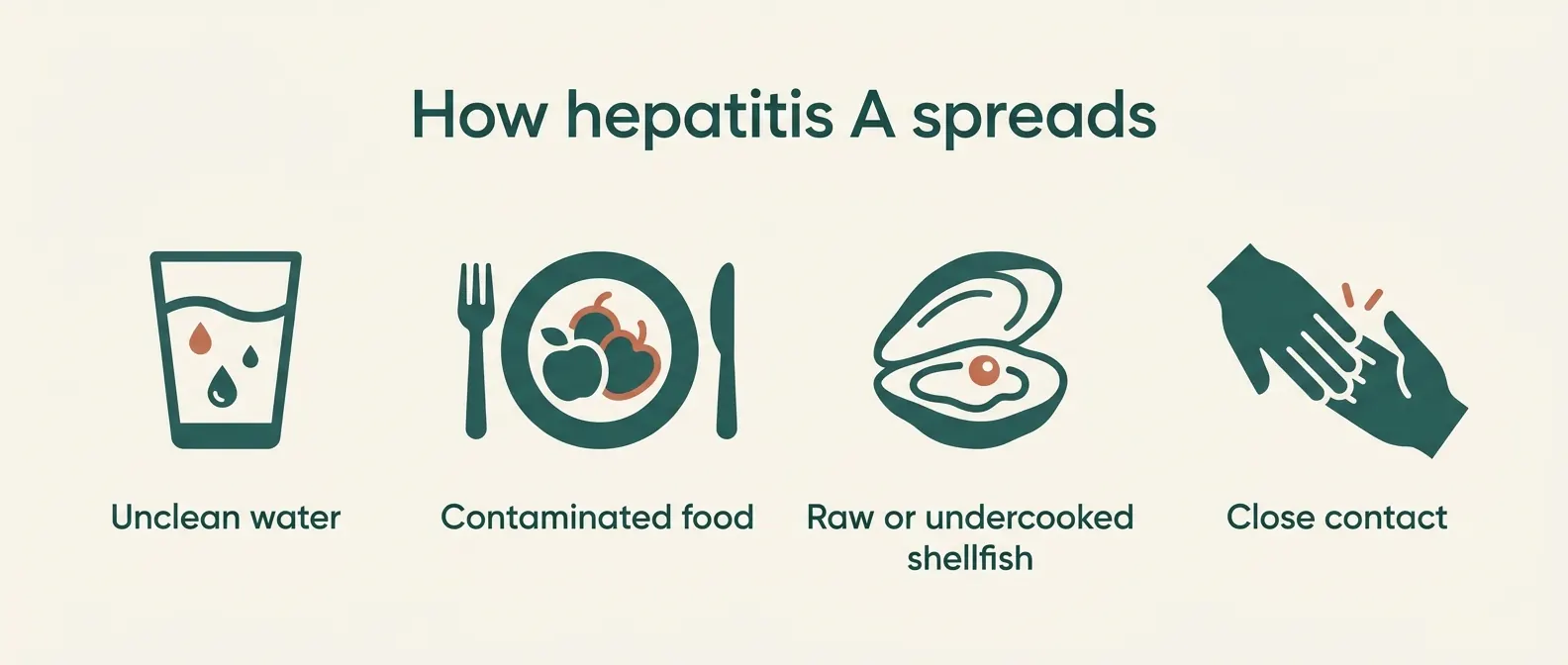
The virus lives in the poo of someone who has it. You can catch it from:
- drinking unclean water;
- eating food that’s been washed or grown in unclean water, or handled by someone with the infection;
- raw or undercooked shellfish, such as oysters and clams;
- close physical contact with someone who has it, including sex and sharing needles.
It can survive on surfaces for several hours, and for longer on hands and food, so it spreads easily between people.
How long it lasts
Hepatitis A usually clears up on its own within three to six months. It doesn’t become a long-term infection and doesn’t cause lasting liver damage. Rarely, it causes severe liver failure: in under 1% of cases overall, but more often in older people and people who already have liver disease.
Recovery can be slow, taking weeks or months, and sometimes the illness relapses: someone who has just recovered falls ill again. Worldwide, the World Health Organization estimates 35,569 people died from hepatitis A in 2023.
How long you’re infectious
You can pass it on from about two weeks before symptoms start. You’re usually infectious until seven days after jaundice started, or seven days after your symptoms started if you haven’t had jaundice.
If you think you have it
See a GP
If you have symptoms and you’ve recently travelled to a country where hepatitis A is common, been in close contact with someone who has it, or have a blood clotting disorder such as haemophilia.
Ask for an urgent GP appointment or call NHS 111
If you think you might have hepatitis A and you’re pregnant, over 60, or have a liver condition.
Looking after yourself
Rest, drink plenty of fluids, and ask a pharmacist or doctor which painkillers are safe for you and how much to take. Don’t drink alcohol, and don’t prepare food or drink for anyone else. Wash your hands well after the toilet, and keep away from other people for seven days after your symptoms or jaundice started: adults should stay off work, and children off school or nursery.
After contact with someone who has it
The vaccine can be given if you’ve been in close physical contact with someone with hepatitis A within the past two weeks. Speak to your GP or NHS 111 straight away rather than waiting for a routine appointment.
How to avoid it
The vaccine
Vaccination is the best way to prevent hepatitis A. It’s recommended for most travellers to many popular destinations: our guide to which countries you need the hepatitis A vaccine for lists them.
When you’re away
Wash your hands thoroughly before preparing and eating food and after using the toilet, drink bottled water, avoid shellfish and uncooked fruit and vegetables, and use a condom or dam during sex.
Hepatitis A in the UK
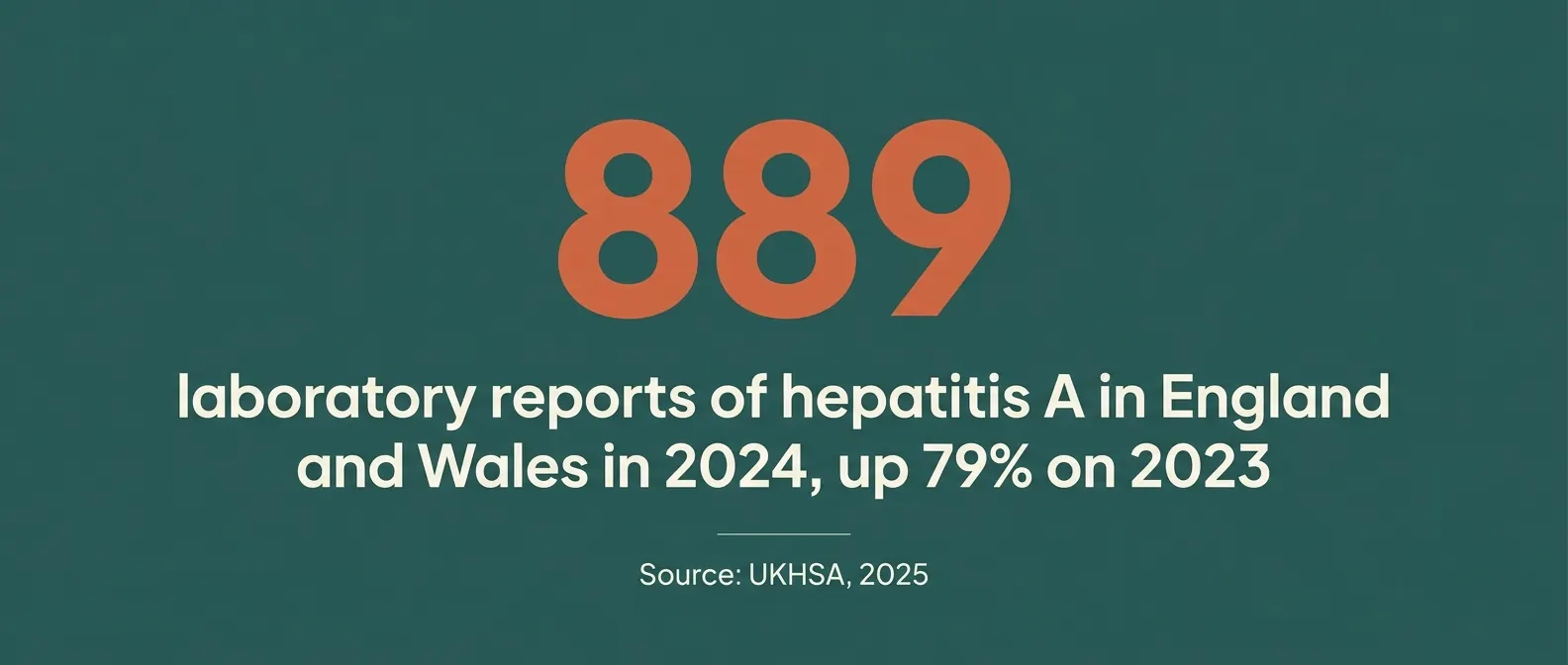
There were 889 laboratory reports of hepatitis A in England and Wales in 2024, 79% more than the 496 in 2023, and the most in a year since 2018. More than half of the confirmed cases had travelled. The most reports were in people aged 25 to 34 (18%), followed by children aged 5 to 9 (17%).
Your vaccine, near you
Miles Pharmacy is at 94 Chessington Road, Ewell, Epsom, KT19 9UR, with a bus stop outside and Ewell West station nearby. If you live in Epsom, or in Ashtead, Leatherhead or Cheam, call us on 020 8393 1000 to book your vaccine before you travel.
Questions about hepatitis A
How long after catching hepatitis A do symptoms start?
Usually around 28 to 30 days, though anywhere from 15 to 50 days.
Can you have hepatitis A without symptoms?
Yes, especially young children. Most children under five have no symptoms, but they can still pass it on.
Is hepatitis A serious?
Most people get better within a few months, and it doesn’t cause long-term liver disease. It tends to be more severe with age, and rarely causes liver failure, more often in older people and those with liver disease.
Is hepatitis A contagious?
Yes. It spreads through the poo of someone who has it, by close physical contact, and through food and water. Casual contact between people doesn’t spread it. You can pass it on from about two weeks before symptoms start.
Is hepatitis A the same as hepatitis B or C?
No. They’re different viruses. Unlike hepatitis B and C, hepatitis A doesn’t cause long-term liver disease.
Can I catch it in a good hotel?
Yes. Cases have occurred in tourists staying in good quality hotels. Our guide to having the hepatitis A vaccine at the last minute covers what to do if you’re leaving soon.
Sources
- NHS: hepatitis A, checked 2 October 2026
- UKHSA: hepatitis A infection, prevention and control guidance, and hepatitis A factsheet, checked 2 October 2026
- UKHSA: the Green Book, chapter 17, hepatitis A, checked 2 October 2026
- NaTHNaC: hepatitis A factsheet, checked 2 October 2026
- UKHSA: laboratory reports of hepatitis A infections in England and Wales, 2024, checked 2 October 2026
- WHO: hepatitis A fact sheet, 28 July 2026, checked 2 October 2026