South Asia
Pakistan travel vaccinations
Two things make Pakistan different from most trips. Typhoid there includes a drug-resistant strain that most antibiotics won't touch, which makes an in-date typhoid vaccine worth more than usual. And if you're staying four weeks or more, you can be asked for a polio certificate when you leave the country.
- Consultation with a pharmacist
- GPhC premises 9011598
- Ewell, Epsom
Recommendations depend on your itinerary, health history and current guidance.
What the guidance says
Vaccines for Pakistan
Beyond that, hepatitis A and an in-date tetanus, diphtheria and polio booster cover most travellers. Hepatitis B, rabies and Japanese encephalitis come in depending on where you're going, how long for, and whether you're staying with family.
12 vaccines the guidance mentions for Pakistan, 10 of them given here. Which apply to you is settled at your consultation.
Recommended for most travellers
It spreads through contaminated food and water, and a good hotel doesn't remove the risk.
- Timing
- No minimum notice. Protection develops within about two weeks, and a dose on the day you fly is still worth having.
- Protection
- One dose protects for up to 12 months. A second dose at 6 to 12 months takes that to about 25 years, with a booster at 25 years for anyone still at risk.
If it was more than ten years ago and you'll be anywhere medical care is limited, a booster is recommended. The same injection covers the polio dose described below.
- Timing
- One injection, effective quickly in anyone previously vaccinated.
- Protection
- The full UK course is five doses, which gives most people lifelong protection. Travel boosters top up tetanus, diphtheria and polio for around ten years.
Pakistan has had an outbreak of extensively drug-resistant typhoid since 2016, cases have been detected in travellers returning to the UK, and antibiotic options are limited. Make sure your typhoid vaccine is in date, and keep up food and water care either way.
- Timing
- At least 2 weeks before travel. A dose closer to departure can still be considered, and we'll explain the limits.
- Protection
- Protection lasts about three years. It isn't fully protective, and it doesn't cover paratyphoid, so food and water care still matters.
For some travellers, depending on the trip
Vaccination may be considered from age 12 for people travelling to an outbreak area, or travelling there often or long-term. Daytime bite avoidance is the main protection.
- Timing
- IXCHIQ must be given at least 30 days before travel. Vimkunya has no fixed minimum, but earlier is better.
- Protection
- Both vaccines are a single dose. Most people make protective antibodies within about three weeks, and the immune response starts to build within a week. The need for a booster hasn't been established.
The oral vaccine is aimed at aid workers and anyone heading to an outbreak area, or after flooding, with limited access to clean water and medical care.
- Timing
- Course should be completed at least a week before travel.
- Protection
- Risk for most travellers is low; the vaccine is aimed at specific groups.
Vaccination is only considered in specific cases, usually for people who've had dengue before.
Not given at Miles Pharmacy; referred on after assessment.
- Timing
- Two doses three months apart, so it needs planning well ahead.
- Protection
- Considered mainly for people who've had dengue before.
- Timing
- The very rapid schedule gives protection within about three weeks for adults. Other schedules take one to two months to protect.
- Protection
- Around 90% of adults respond. After a complete course, healthy people don't need a booster: protection against chronic infection lasts 20 to 30 years or more.
Risk is likely year-round with peaks during and after the rains, June to October. Considered for a month or more in an affected area, frequent trips, uncertain plans, or rural exposure such as rice fields and pig farms.
- Timing
- The course must finish at least a week before possible exposure: about five weeks on the standard schedule, two weeks on the accelerated one.
- Protection
- Protection begins 7 days after the second dose. One dose is not enough. First booster at 12 to 24 months for ongoing risk, or at 12 months for people living in a risk area.
Make sure you've had two doses of MMR. Babies from six months old who'll be mixing with local people can have an early dose.
- Timing
- Two doses at least a month apart; the second can be brought forward for travel.
- Protection
- Two doses give long-lasting protection. A dose given before 12 months doesn't count towards the two.
Most people are covered by the UK childhood course, and a booster is recommended for some travellers, including anyone staying four weeks or more who can't have live oral vaccine, and those working in refugee camps or healthcare. Separately, stays of four weeks or more can trigger the exit certificate rule below.
- Cost
- Given with Tetanus, diphtheria and polio, so there's nothing extra to pay for it.
- Timing
- For the exit certificate, the dose must be given between 4 weeks and 12 months before you leave the country.
- Protection
- A booster given 4 weeks to 12 months before leaving a polio-infected country also satisfies the exit certificate rule.
Vaccination before travel is recommended for stays over a month, cycling or running, work with animals, and anywhere treatment would be hard to reach. It doesn't replace urgent care after a bite, but it simplifies that treatment and removes the need for immunoglobulin, which is scarce. Children are at higher risk.
- Timing
- Standard course 21 to 28 days; accelerated course 7 days.
- Protection
- A full course primes your immune system, so if you are bitten you need fewer doses of treatment and usually no immunoglobulin. It never removes the need for urgent treatment after a bite.
Not given at Miles Pharmacy; referred on after assessment.
- Timing
- A tuberculin skin test is needed first from 6 years of age.
- Protection
- Given once; no boosters.
the guidance mentions that are not usually part of a trip like this.
A starting point, not a quote. Course prices assume every dose is given here, and some courses need more than one visit, so the timings matter as much as the totals.
Malaria and certificates
Where the risk actually is
Malaria tablets aren't routinely recommended for Pakistan. Risk is low below 2,000 metres, which covers Lahore, Karachi, Islamabad and most of the country, and very low in the mountains above that. In both cases the guidance is awareness and bite avoidance rather than tablets. Tablets may still be considered in the low-risk areas for people at higher risk, such as long stays visiting family, pregnancy, travellers over 70, young children, or anyone with a weakened immune system or without a working spleen. Where they are advised, atovaquone/proguanil, doxycycline and mefloquine are the options.
- Very low risk everywhere above 2,000 metres
- Low risk everywhere below 2,000 metres
Polio certificate on the way out. This one catches people out. If you're in Pakistan for four weeks or more, you can be asked on the way out for proof of polio vaccination given between 4 weeks and 12 months before you leave, recorded on an International Certificate of Vaccination or Prophylaxis. Miles Pharmacy can issue the certificate. Without it, you may be vaccinated at the airport with the live oral vaccine, which isn't suitable for anyone immunosuppressed or their household contacts. If your trip is anywhere near four weeks, sort the dose and the certificate before you fly.
Yellow fever certificate. You won't need a yellow fever certificate flying from the UK. Pakistan requires one from travellers aged 1 year and over arriving from a country with yellow fever risk, or who've spent more than 12 hours in transit at an airport in one. Miles Pharmacy is a registered Yellow Fever Vaccination Centre. The certificate becomes valid 10 days after vaccination and lasts for life. About the yellow fever vaccine
Worth knowing
Beyond the vaccines
Not everything worth knowing has a vaccine. These are the rest: what the guidance says to prepare for. It hasn't issued a notice for Pakistan in the three months to 8 October 2026.
- Altitude
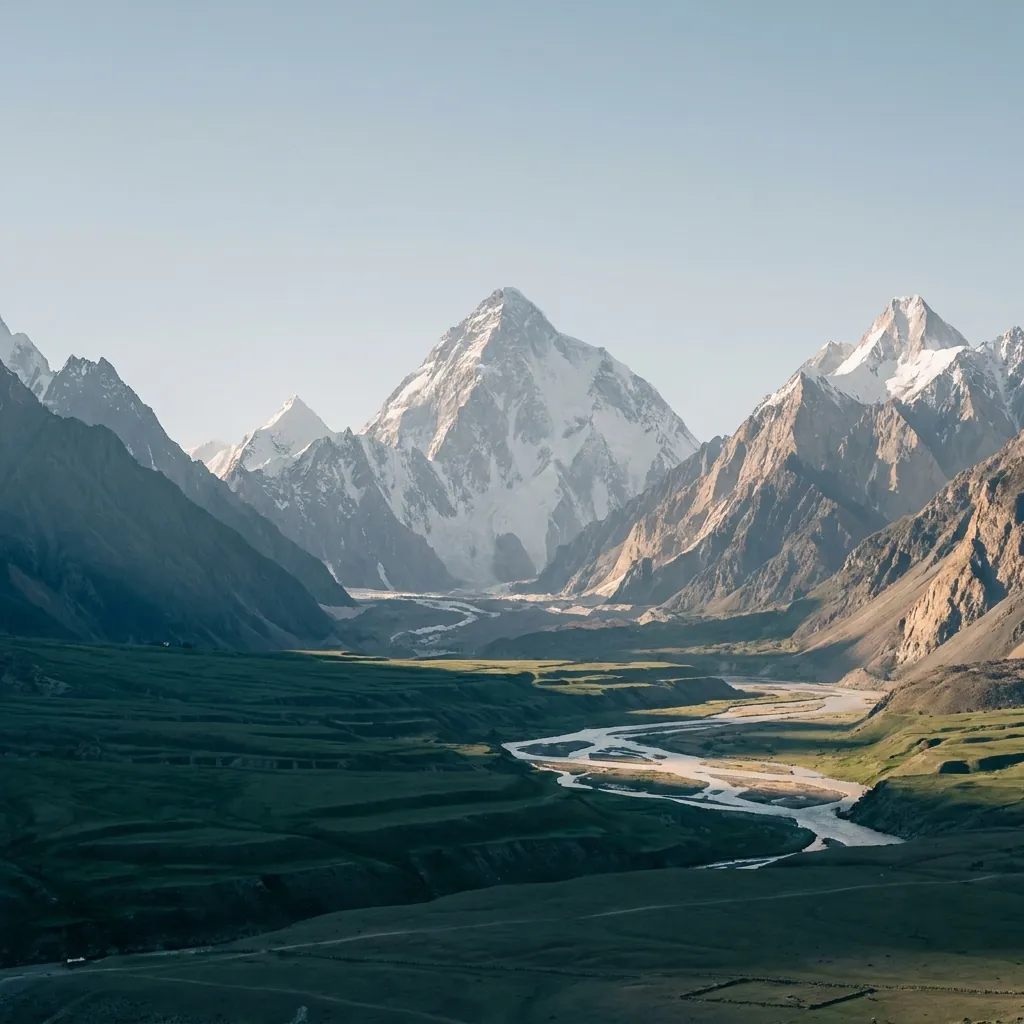
- The north goes high quickly. If you're heading for Hunza, Skardu, the Karakoram Highway or a trek, plan a gradual ascent above 3,000 metres, build in rest days and be ready to descend if symptoms start.
- Air quality
- Air quality in Lahore and much of Punjab is poor through the winter smog season. If you have a heart or lung condition, plan around it and bring enough of your usual medication.
- Food and water
- Food and water hygiene does more work than any single vaccine here, particularly with drug-resistant typhoid circulating. Bottled or treated water, no ice from unknown sources, and food freshly cooked and served hot.
- Insect bites
- Mosquitoes and ticks in the region also spread dengue, chikungunya, Zika, JE, scrub typhus, leishmaniasis, West Nile and Crimean-Congo haemorrhagic fever. None of those have a travel vaccine here, so repellent, covered skin and screened or air-conditioned rooms matter day and night.
- Zika
- Zika is present in Pakistan. If you're pregnant or planning a pregnancy, talk to us before you travel, as there's specific guidance on avoiding conception after your trip.
- Sexual health
- Condoms are the most effective protection against sexually transmitted infections, and hepatitis B vaccination is worth discussing if there's any chance of new partners.
Before you book
Questions about Pakistan
Answered by the pharmacist who signs this page off.
-
For most trips, hepatitis A, typhoid and an in-date tetanus, diphtheria and polio booster. Hepatitis B, rabies and Japanese encephalitis depend on your itinerary, how long you're staying and what you'll be doing. We'll only recommend what fits the trip.
Samit Patel Superintendent Pharmacist Reviewed 2026-09-17 -
If you're staying four weeks or more, you can be asked for one on exit. It has to show a polio dose given between 4 weeks and 12 months before you leave, recorded on an International Certificate of Vaccination or Prophylaxis. Without it, you may be vaccinated at the airport with the live oral vaccine, which isn't suitable for everyone. Sort it before you fly.
Samit Patel Superintendent Pharmacist Reviewed 2026-09-17 -
Usually not. Risk is low below 2,000 metres and very low above it, and the guidance in both cases is bite avoidance rather than tablets. We may still suggest them if you're at higher risk, for example a long stay with family, pregnancy, over 70, a young child or immunosuppressed.
Samit Patel Superintendent Pharmacist Reviewed 2026-09-17 -
Pakistan has had an outbreak of extensively drug-resistant typhoid since 2016, and cases have turned up in travellers returning to the UK. Treatment options are limited, which is why the vaccine and careful food and water choices both matter. The vaccine doesn't cover paratyphoid, so hygiene still counts.
Samit Patel Superintendent Pharmacist Reviewed 2026-09-17 -
Not if you're flying from the UK. You will if you're aged 1 or over and arriving from a country with yellow fever risk, or you've spent more than 12 hours in transit at an airport in one.
Samit Patel Superintendent Pharmacist Reviewed 2026-09-17 -
A first trip to the cities usually starts at £254 for hepatitis A, typhoid and the combined tetanus, diphtheria and polio booster, which also covers the polio dose. Hepatitis B and rabies add more if your trip calls for them. We'll confirm what's recommended before you pay for anything.
Samit Patel Superintendent Pharmacist Reviewed 2026-09-17

NaTHNaC Registered Yellow Fever Vaccination Centre
A Yellow Fever Vaccination Centre on the NaTHNaC register, and the same travel clinic that gives your other vaccinations.
GPhC registered premises
9011598
Private and NHS pharmacy services from one registered pharmacy in Ewell, Epsom.
Find the pharmacy
Where to come, and when

Ewell, Epsom, Surrey KT19 9UR
How to get here Parking, trains, buses and step-free access
-
The door is on Chessington Road, with step-free access
-
The station car park, on Station Approach off Chessington Road
- Address Elizabeth Court, Station Approach, KT17 1DR
-
Step-free to all platforms, by a footbridge with lifts
- Step-free to every platform (National Rail step-free category A)
- Lifts two, on the footbridge
Checked against nationalrail.co.uk
-
Outside the pharmacy, with a stop on each side of Chessington Road
-
Cycle parking at the station
Take this with you
Point your phone's camera at the code and this page opens there, with the directions one tap away.
Checked against NaTHNaC TravelHealthPro on . Entry requirements change: check TravelHealthPro and FCDO before you travel.
Travel health
Book before you pack.
Questions first? Call us on 020 8393 1000
- Private and NHS
- GPhC premises 9011598
- Open until 6:30pm
Prefer to talk? 020 8393 1000