Rabies is found in Morocco, Turkey and Egypt, and UKHSA rates all three as high risk. In 2018 and again in 2025, people from the UK died of rabies after contact with an animal in Morocco. UK travel health guidance recommends the rabies vaccine for some travellers to all three countries, including longer stays and people who’ll be running or cycling. You can book your rabies vaccine in Epsom with us and talk through your trip.
How the three countries compare
| Country | UKHSA rabies risk | What NaTHNaC says |
|---|---|---|
| Morocco | High | “Rabies is considered a risk and has been reported in domestic animals in this country.” |
| Turkey | High | “Rabies is considered a risk and has been reported in domestic animals in this country.” |
| Egypt | High | “Rabies is considered to be a risk in this country.” |
High risk, in UKHSA’s terms, means rabies occurs in both wild animals and companion animals such as dogs and cats. For all three countries, NaTHNaC lists the rabies vaccine under “Some travellers”, alongside vaccines such as hepatitis B.
What happened in 2018 and 2025
In November 2018, Public Health England reported that a UK resident had died of rabies after a cat bite during a visit to Morocco. In June 2025, UKHSA reported that a person from the UK had died after contact with a stray dog during a visit to Morocco. UKHSA said there was no risk to the wider public, as there’s no documented evidence of rabies passing between people.
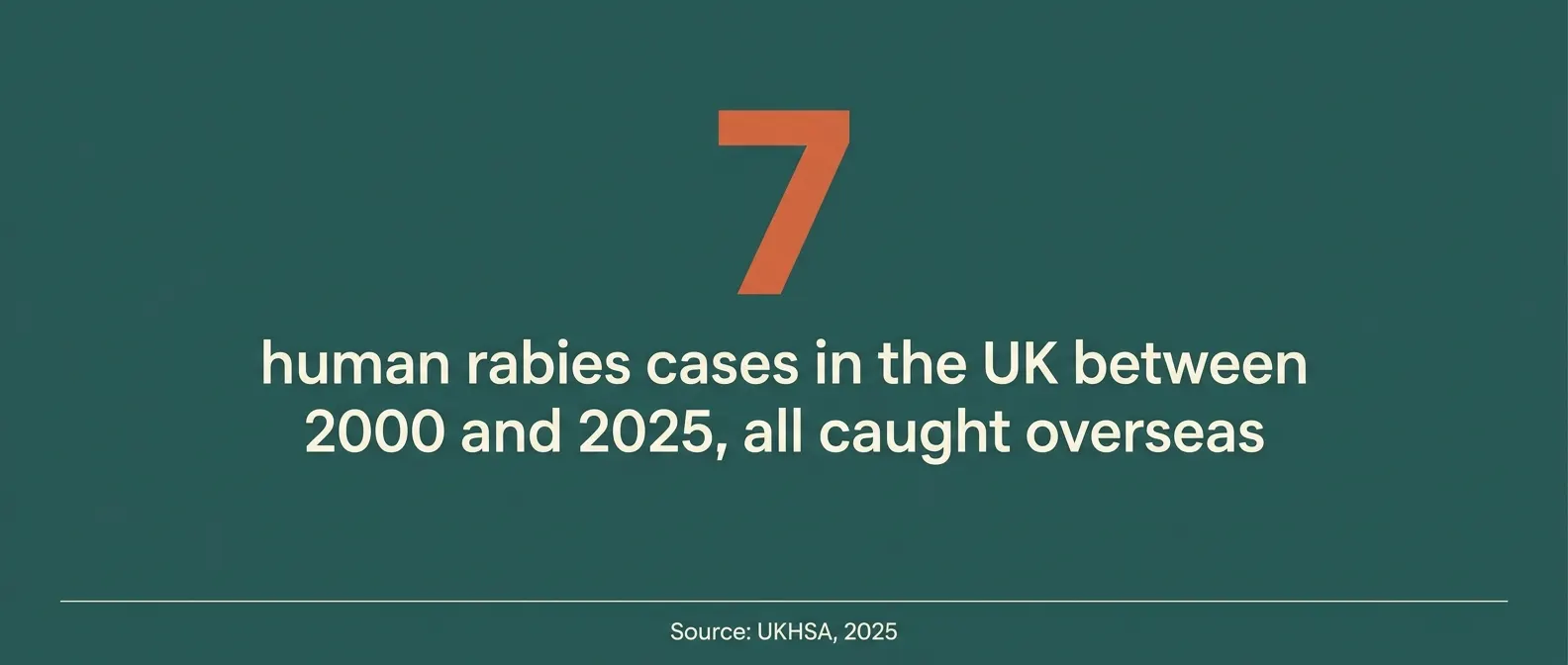
Cases like these are rare, but they’re not one-offs. UKHSA says seven human rabies cases were reported in the UK between 2000 and 2025, all in people who caught it overseas.
Animals at resorts, beaches and markets
The Foreign Office’s advice for Morocco says stray animals are common in many towns and cities, and that packs of dogs often gather in parks, on wasteland and in quieter areas and can behave aggressively. An animal doesn’t have to look ill to carry rabies. UKHSA’s advice for travellers says rabid animals may seem unusually tame, and some show no signs at all.
UK guidance for travellers is to:
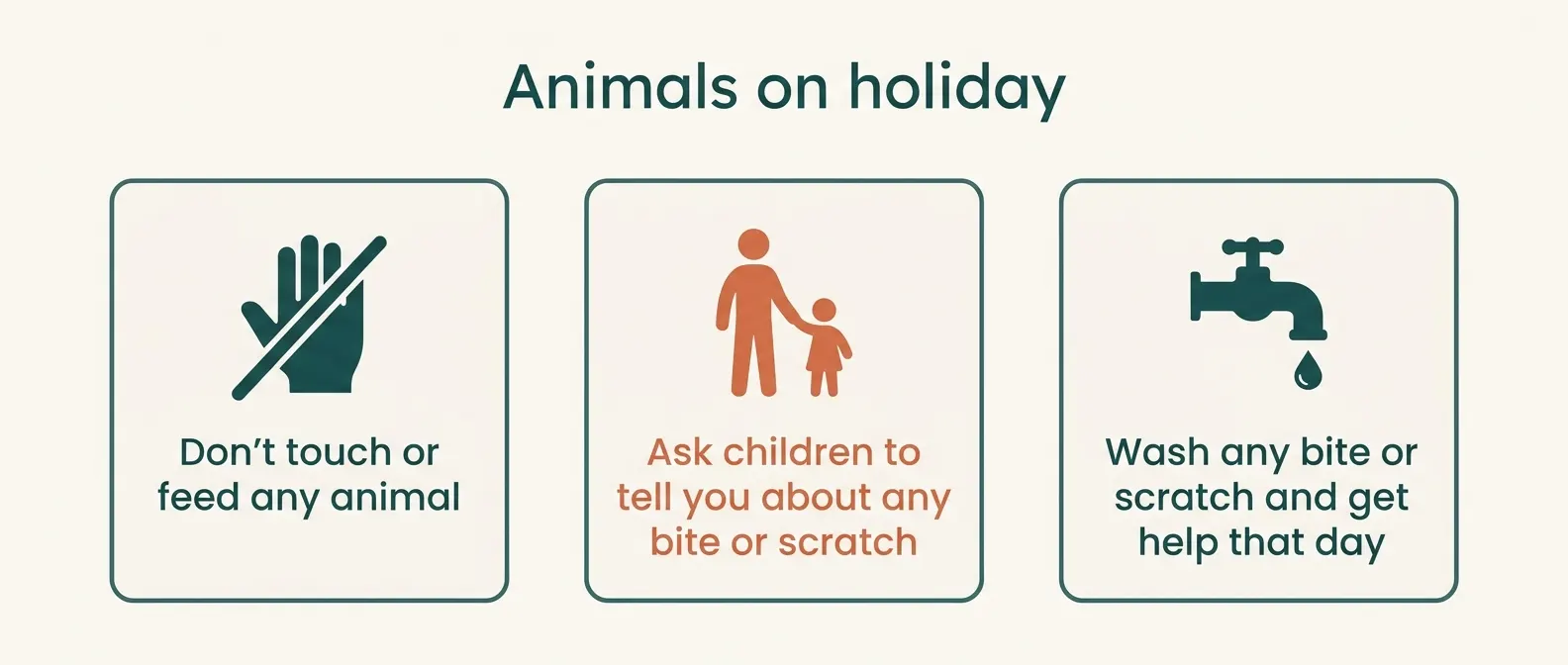
- avoid contact with dogs, cats and other animals wherever possible, including ones that look friendly;
- never touch or feed animals, even in zoos or animal sanctuaries;
- avoid attracting strays by dropping litter or offering them food;
- tell children not to touch animals, and to tell you straight away about any bite or scratch.
UKHSA’s advice for travellers says children are at greatest risk, because they’re more likely to touch animals and may not tell an adult.
Who UK guidance recommends the vaccine for
NaTHNaC’s pages for Morocco, Turkey and Egypt recommend the rabies vaccine before travel for people whose activities put them at greater risk, including:
- people at risk through their work, such as those working with animals;
- people going to areas where treatment after a bite and medical care are hard to reach;
- people planning higher-risk activities such as running or cycling;
- long-stay travellers, staying more than a month.
NaTHNaC also explains what the vaccine changes: “A full course of pre-exposure vaccines simplifies and shortens the course of post-exposure treatment and removes the need for rabies immunoglobulin which is in short supply world-wide.” The pharmacist will go through your own plans with you, whether it’s a week in a resort or a month travelling.
Fitting the course around a short break
The standard course is three doses over 3 to 4 weeks. If you’ve booked a last-minute break, the accelerated course gives all three doses in a week. The NHS suggests getting travel advice around 8 weeks before you go. Our guide to how many doses of the rabies vaccine you need shows what fits around your flight.
If you’re bitten, scratched or licked
UKHSA’s advice after the 2025 case was to “wash the wound or site of exposure with plenty of soap and water and seek medical advice without delay”. Get help locally that day, even if you’ve been vaccinated, and contact your GP when you’re home. Our guide to whether 7 days is too late for the rabies vaccine after a bite covers what to do if you didn’t get help at the time.
Before your holiday, in Epsom
We have the rabies vaccine in stock at our Epsom pharmacy (checked October 2026), at £80 a dose or £240 for the three-dose course. We’re at 94 Chessington Road, Ewell, Epsom, KT19 9UR, with a bus stop outside on each side of the road and Ewell West station nearby, step-free to every platform. Whether you’re in Epsom or coming from Ashtead, Leatherhead or Cheam, we’ll book your later doses before you leave your first appointment. Call us on 020 8393 1000.
Questions about rabies in Morocco, Turkey and Egypt
Is there rabies in Turkey?
Yes. UKHSA rates Turkey as high risk, and NaTHNaC says rabies has been reported in domestic animals there.
Is there rabies in Egypt?
Yes. UKHSA rates Egypt as high risk, and NaTHNaC lists the rabies vaccine for some travellers.
Should I have the rabies vaccine for Morocco?
NaTHNaC recommends it for some travellers to Morocco, depending on how long you’re staying, what you’ll be doing and how far you’ll be from medical care. Book an appointment and the pharmacist will go through your trip with you.
Is there rabies in Spain, Greece or Cyprus?
UKHSA lists Spain, Greece, Cyprus, Portugal, France and Italy as no risk for rabies in land animals, though related viruses are found in bats. Spain’s North African cities of Ceuta and Melilla, which border Morocco, are rated high risk.
A stray cat scratched me in Morocco. What should I do?
Wash the scratch with plenty of soap and water and get medical advice without delay. If you’re already home, ask for an urgent GP appointment or call NHS 111.
Sources
- UKHSA: rabies risks in terrestrial animals by country (1 May 2024), checked 3 October 2026
- NaTHNaC: Morocco, checked 3 October 2026
- NaTHNaC: Turkey, checked 3 October 2026
- NaTHNaC: Egypt, checked 3 October 2026
- UKHSA: rabies case confirmed following contact with animal abroad (18 June 2025), checked 3 October 2026
- Public Health England: warning to travellers about rabies risk (12 November 2018), checked 3 October 2026
- UKHSA: Vaccine update, issue 361 (July 2025), checked 3 October 2026
- FCDO: Morocco travel advice, health (19 August 2026), checked 3 October 2026
- UKHSA: rabies information for travellers (12 November 2024), checked 3 October 2026
- NaTHNaC: worldwide rabies risk reminder, checked 3 October 2026
- UKHSA blog: how to avoid rabies and what to do if you’re exposed while travelling (18 June 2025), checked 3 October 2026
- UKHSA: the Green Book, chapter 27, rabies (May 2023), checked 3 October 2026
- NHS: rabies, checked 3 October 2026