Travel vaccination
Malaria Tablets in Epsom
Malaria kills UK travellers every year, and almost every one of those deaths is preventable. In 2023 there were 2,106 cases in people returning to the UK, the most since 2001, and nine in ten of those whose history was known hadn't taken prevention tablets.
- Registered Yellow Fever Vaccination Centre
- GPhC premises 9011598
Recommendations depend on your itinerary, health history and current guidance.

NaTHNaC Registered Yellow Fever Vaccination Centre
A Yellow Fever Vaccination Centre on the NaTHNaC register, and the same travel clinic that gives your other vaccinations.
GPhC registered premises
9011598
Private and NHS pharmacy services from one registered pharmacy in Ewell, Epsom.
In short
Miles Pharmacy in Epsom supplies malaria prevention tablets after a short consultation. Which tablet suits you depends on where you're going, how long for and your health. The most used options start one or two days before travel, so it's rarely too late to get protected.
- UK cases in 2023
- 2,106 the most since 2001
- Visiting friends and relatives
- Three in four of those cases
- Most options start
- One to two days before so it's rarely too late
- Consultation
- £20 tablets priced for your trip
The ABCD of malaria prevention
UK guidance frames malaria prevention in four parts. Tablets are only one of them.
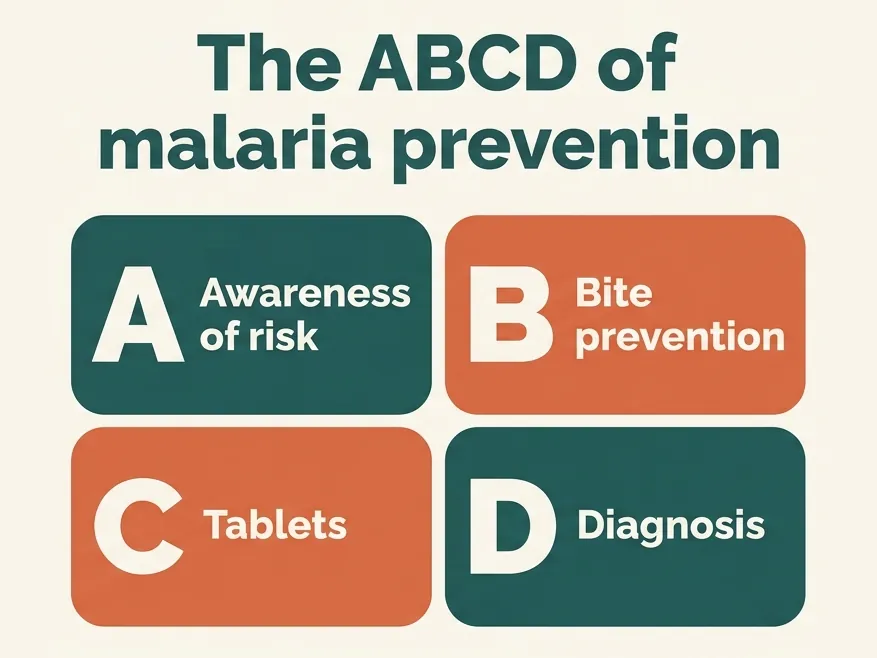
- Awareness of risk
- Risk depends on the exact place, the season, how long you stay, what you do and where you sleep. Parts of a country can be high risk while its cities have none.
- Bite prevention
- The mosquitoes that carry malaria bite from dusk to dawn. Repellent, covering up in the evening and sleeping under a treated net or in screened rooms all cut your risk. In Asia, the mosquitoes that spread Japanese encephalitis bite in the evening and overnight too, so the same habits help.
- Chemoprophylaxis
- Prevention tablets, where the guidance recommends them for your destination. Taken as directed and combined with bite avoidance, they give substantial protection. No tablet gives complete protection.
- Diagnosis
- Any fever of 38C or higher from a week after you first arrive in a malaria area, or any illness within a year of coming home, needs an urgent malaria test. Tell the doctor where you've been.
Who needs malaria tablets
- Where the guidance recommends them
- Tablets are recommended for many parts of sub-Saharan Africa, parts of South and South-East Asia, Central and South America and Oceania. Within a country, the advice often differs by region, altitude and season.
- Africa matters most
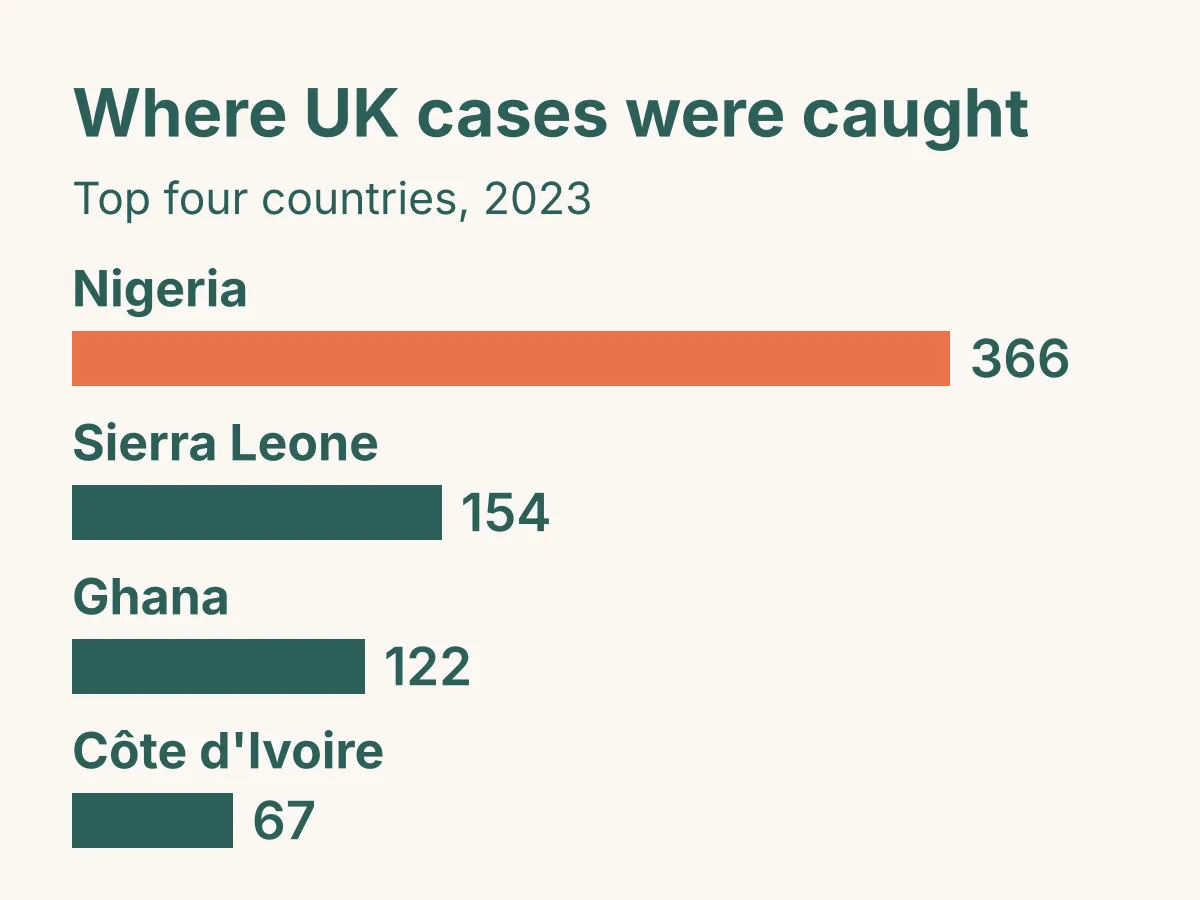
- Most UK malaria cases are caught in Africa, particularly West Africa, which accounted for 69% of cases in 2023 where the destination was known.
- People visiting family
- Three in four UK malaria cases in 2023 were in people visiting friends and relatives. Longer stays, rural visits and the belief that you're still immune all add up.
- Where bite avoidance is enough
- For low-risk areas, the guidance advises bite avoidance rather than tablets. Tablets may still be considered for people at higher risk of severe malaria, such as pregnant women, older travellers and anyone without a working spleen.
- Our destination guides
- Each of our country guides spells out where tablets are and aren't recommended.
The tablets, side by side
These aren't listed in order of preference. The right one depends on your destination and on you.
-
Atovaquone plus proguanil
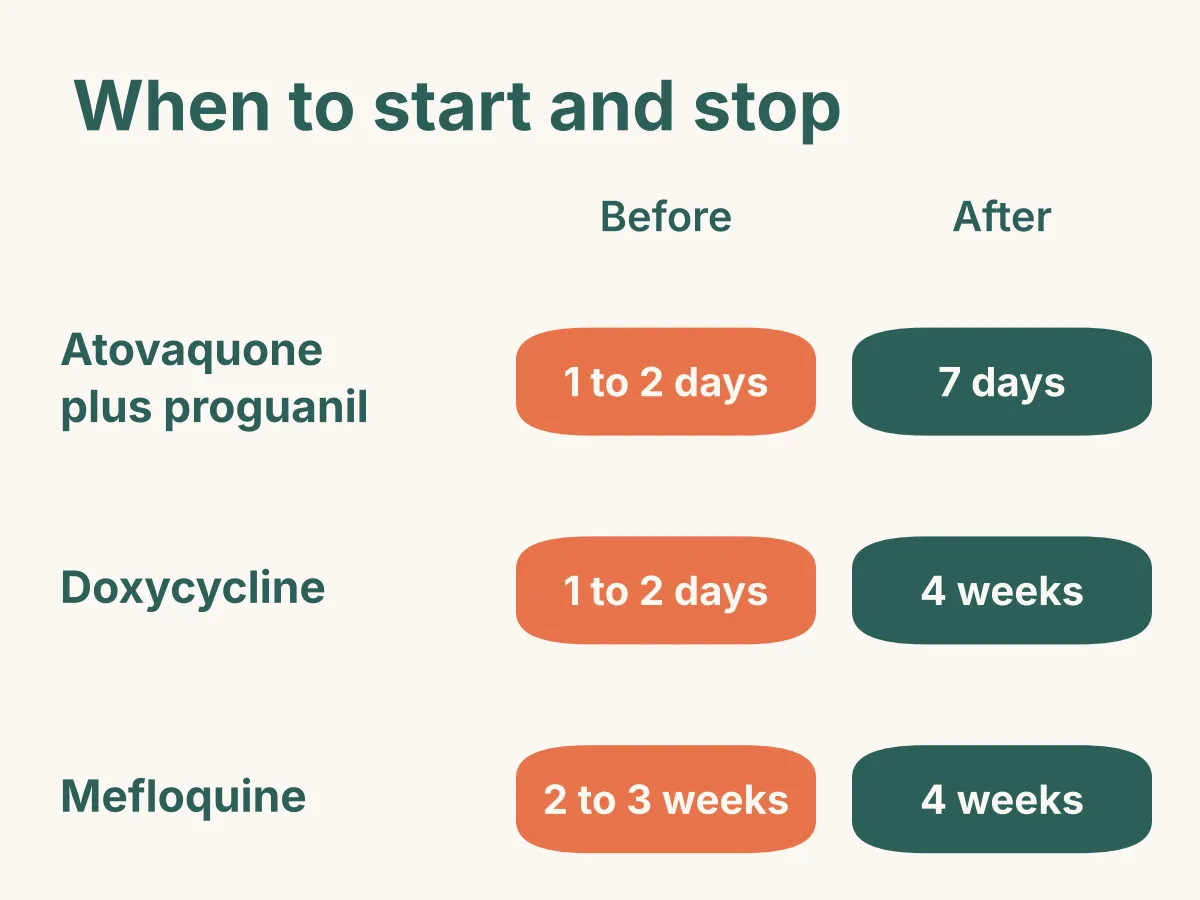
One tablet a day, starting one to two days before you arrive and continuing for seven days after you leave. The shortest course either side of the trip, well tolerated, and suitable for last-minute travel and children from 5kg. The most expensive per tablet, so it's best value on shorter trips. One brand can be bought from a pharmacy without a prescription by adults over 18 who weigh more than 40kg.
-
Doxycycline
One a day, starting one to two days before and continuing for four weeks after you leave. Usually the lowest-cost option, which makes it popular for longer trips. Not for children under 12, and it can make your skin burn more easily in the sun. Take it with plenty of water and stay upright for an hour afterwards.
-
Mefloquine
One tablet a week, starting two to three weeks before you go so you can check it suits you, and continuing for four weeks after. Convenient for long stays, but not suitable for anyone with a history of depression, anxiety, psychosis or another mental health condition, epilepsy or seizures. It's currently in short supply in the UK.
-
Chloroquine
Two tablets a week, starting one week before and continuing for four weeks after. Malaria in most of the world is now resistant to it, so it's only recommended for a few areas. It's safe in all stages of pregnancy, but not for anyone with epilepsy.
-
Chloroquine with proguanil
You may see this combination on older advice. Proguanil has been discontinued in the UK, so it's no longer available.
-
Work it out for your trip
Your malaria tablet plan
Work it out
Your malaria tablet plan
Enter your dates in the risk area. It shows the start and stop dates for each option and how many tablets each one needs. It doesn't choose your tablet: the pharmacist does that against your destination and your health.
This works out an answer in your browser. With JavaScript off, the sections below say the same thing in full.
Call us on 020 8393 1000Your answer
Put in your dates and it will show, for each option the guidance still lists, the day to start, the day of the last tablet and how many tablets that is.
- Options the guidance still lists
- 4
- No longer available
- 1
- Rules last checked
- 17 September 2026
This is a guide to timing and tablet numbers, not a prescription. The pharmacist confirms which tablet suits you and your destination.
How we choose the right one with you
- Your destination
- Resistance patterns decide which tablets work where. The UK guidance sets out the suitable options country by country.
- How long you're away
- Daily tablets with a short tail suit short trips. On long trips, weekly tablets or a lower-cost daily tablet may make more sense.
- Your health
- Mental health history, epilepsy, kidney problems and some heart conditions rule certain tablets out. So can other medicines, including warfarin, some anti-epilepsy drugs and HIV medicines.
- Pregnancy and trying to conceive
- The guidance advises pregnant women to avoid malaria areas where possible. If you have to go, some tablets can be used, sometimes with extra folic acid, and we'll plan it carefully with you.
- Children
- Doses are based on weight, not age. Some tablets come as smaller children's tablets, and doxycycline isn't used under 12.
- Work and hobbies
- Pilots shouldn't take mefloquine, and some dive centres won't accept it either.
- Cost
- The price of a course depends on the tablet and on how long you're away, including the days before and after. We work it out with you at the consultation.
Taking them as directed
- Finish the course
- The days or weeks after you come home are part of the protection. Stopping early leaves you at risk from parasites picked up in your last days away.
- Missed a dose
- Take it as soon as you remember and carry on. Don't double up. If you've missed several, call us or a local doctor.
- Vomiting
- Being sick soon after a dose can stop it being absorbed. We'll tell you what to do for your tablet.
- Buy them here
- Antimalarials bought in the tropics can be fake or substandard. Get your whole supply in the UK before you go.
- Report side effects
- Anyone can report a suspected side effect to the MHRA through the Yellow Card scheme.
Emergency standby treatment for remote trips
- Who it's for
- People taking prevention tablets and travelling somewhere remote, more than 24 hours from medical care. On trips that remote, ask about rabies vaccination too, as rabies treatment can be hard to get quickly.
- What it is
- A treatment course you carry and only start if you develop a fever and genuinely can't see a doctor within 24 hours. It's a different drug from your prevention tablets, and it doesn't replace them.
- You still need a doctor
- Seek medical attention as soon as you can, even after starting it, because many other illnesses also cause fever. We give written instructions with every standby course.
Fever after travel is malaria until proven otherwise
What to watch for. Fever, sweats and chills, headache, aching muscles, feeling generally unwell, and sometimes vomiting or diarrhoea. It can feel like flu.
When. Usually within weeks of return, but some types can appear months later, even up to a year. Tablets don't stop the dormant forms of two malaria species.
What to do. Get medical help the same day, say where you've travelled and ask for a malaria test. One negative test doesn't rule it out if symptoms continue.
Visiting family? You're not immune any more
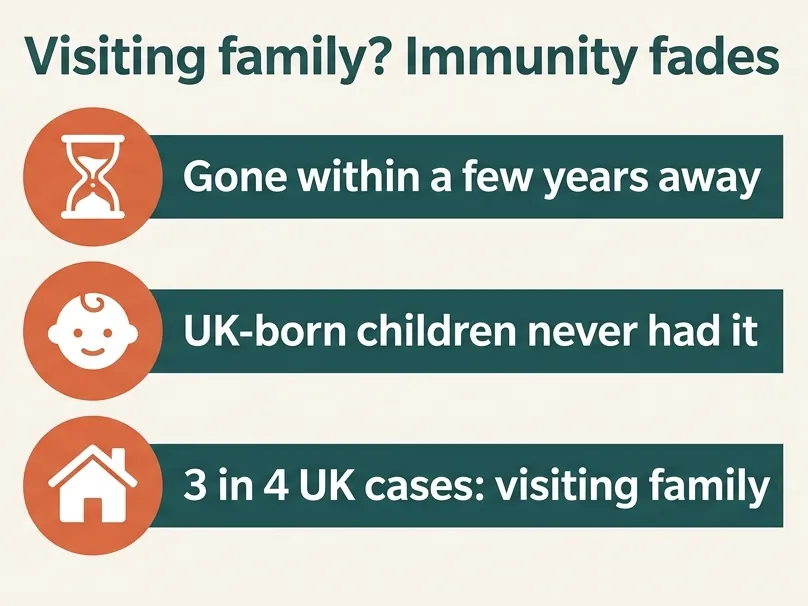
- Immunity fades
- Partial immunity from growing up in a malaria country fades within a few years of living elsewhere. Children born in the UK never had it.
- The numbers
- Most UK malaria cases are in people visiting friends and relatives, and most of them didn't take tablets.
- Longer stays, same rules
- Long visits, rural areas and staying in family homes without screens all raise the risk. Tablets and nets make the biggest difference. Visitors to the same countries often need typhoid and hepatitis A vaccines too.
Your appointment
What the consultation involves
-
Bring
Your itinerary with dates, including stopovers, a list of your medicines and any health conditions, and weights for any children travelling.
-
What we do
Check the current guidance for every place you're visiting, go through which tablets suit you, and give you a plan with start and stop dates.
-
Alongside vaccines
Malaria tablets can be sorted at the same appointment as your travel vaccines, and your yellow fever certificate too if your route needs one.
Before you book
Questions about malaria tablets
Answered by the pharmacist who signs this page off.
-
The consultation is £20. The tablets are priced on top, because the cost depends on which tablet suits you and how long you're away, including the days before and after your trip. Our calculator shows how many tablets each option needs, and we confirm the price with you before you pay for them.
-
One to two days before you arrive for atovaquone plus proguanil and doxycycline, one week before for chloroquine, and two to three weeks before for mefloquine.
-
Seven days for atovaquone plus proguanil, and four weeks for doxycycline, mefloquine and chloroquine. Finishing the course matters.
-
There isn't one best tablet. The right one depends on your destination, trip length, health, other medicines and budget. Atovaquone plus proguanil suits short and last-minute trips, doxycycline is often the lowest-cost daily option, and mefloquine is weekly.
-
No. Proguanil has been discontinued in the UK, so the chloroquine and proguanil combination isn't available any more. Chloroquine on its own is still available but only useful for a few areas.
-
Rarely. Two of the main options start just one or two days before you arrive. Even on the day before you fly, it's worth calling us.
-
One brand of atovaquone plus proguanil can be bought from a pharmacy by adults over 18 weighing more than 40kg, and chloroquine is a pharmacy medicine too. The others need a prescription or a pharmacist consultation. Either way, the pharmacist checks the tablet suits your destination and your health.
-
Yes. Any immunity fades within a few years of living in the UK, and people visiting family make up most UK malaria cases.
-
For most trips to those countries, tablets aren't advised. India has three states where tablets are recommended, and Sri Lanka has no malaria at all. Our destination guides set out the detail for each country. We'll check your exact route with you at your appointment.
-
Get medical help the same day, say where you've travelled and ask for a malaria test. Some types can appear up to a year after you return.

Guides and advice
Guides on malaria prevention tablets
-
 Malaria
5 Common Malaria Myths Debunked!
-
 Malaria
What is the right time to take the Malaria Vaccine?
-
 Malaria
Are You Travelling to a Malaria Hotspot Location? Read this
Guides are a starting point, not a diagnosis. What is right for you depends on your health history, your medicines and what a pharmacist finds on the day.
Find the pharmacy
Where to come, and when
Miles Pharmacy is in Epsom, Surrey. Patients come to us from across Surrey, including Ewell, Ashtead, Leatherhead and Banstead, and from Sutton, Cheam, Surbiton and Kingston in south-west London.

Ewell, Epsom, Surrey KT19 9UR
How to get here Parking, trains, buses and step-free access
-
The door is on Chessington Road, with step-free access
-
The station car park, on Station Approach off Chessington Road
- Address Elizabeth Court, Station Approach, KT17 1DR
-
Step-free to all platforms, by a footbridge with lifts
- Step-free to every platform (National Rail step-free category A)
- Lifts two, on the footbridge
Checked against nationalrail.co.uk
-
Outside the pharmacy, with a stop on each side of Chessington Road
-
Cycle parking at the station
Take this with you
Point your phone's camera at the code and this page opens there, with the directions one tap away.
Sources
- UKMEAG Malaria prevention guidelines for travellers from the UK 2026, dated . Checked .
- UKMEAG 2026: chemoprophylaxis. Checked .
- UKHSA: Malaria imported into the UK, 2023. Checked .
- NaTHNaC: malaria factsheet. Checked .
- NaTHNaC: updated guidelines for malaria prevention in travellers from the UK. Checked .
Travel health
Book before you pack.
Choose a service and a date that suits you. One of us confirms it with you directly.
- Private and NHS
- GPhC premises 9011598
- Open until 6:30pm
Prefer to talk? 020 8393 1000